
THE LITTLE BIT 2026 FALL APPEAL
Little Bit Therapeutic Riding Center offers extraordinary services to 575 people a year in a very functional, real-life setting. The sooner a child or adult with a disability receives these services, the more progress they can make towards their greatest level of independence—and happiness. You have the power to provide the expert therapists and instructors, trained volunteers, and specially selected and trained horses that Martin and others need. Will you make a gift today to provide extraordinary Little Bit services as soon as possible?
Thank you!
Did you know? Today, Little Bit provides Therapy (physical, occupational, and speech therapy) and Adaptive Riding services to participants at less than 35 percent of the actual cost.
Martin’s Story
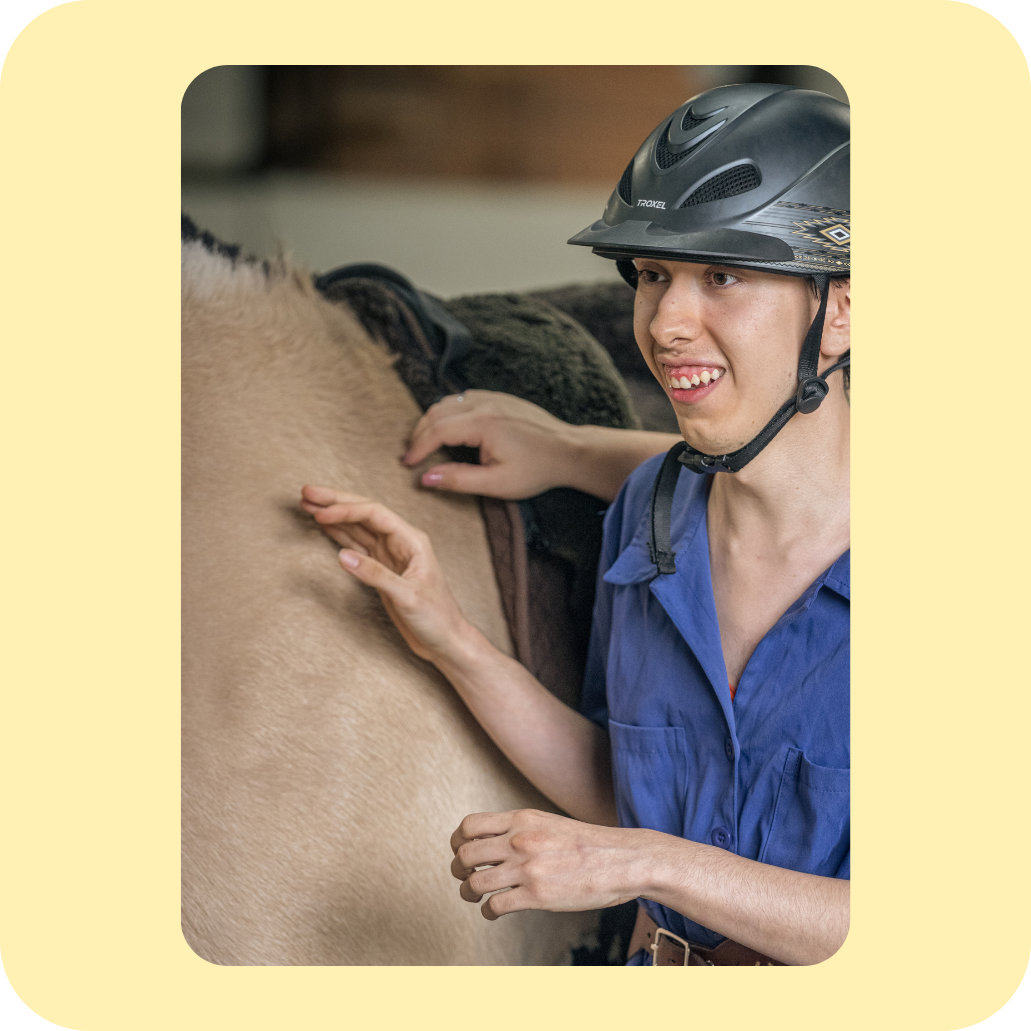
Martin was born first, followed by his sister two years later. He was diagnosed with autism shortly before he turned two. “Martin was my first child, and I wasn’t prepared for a child with autism,” his mom, Elsa, said. “I had to learn everything as we went.”
As Martin grew older, his differences became more visible to other people, and Elsa knew she needed to be more open about the challenges her family faced. “There’s going to be a point in your journey of dealing with the condition of a child in that you’re going to have to open up to avoid your child being bullied, to avoid your doctors guessing, and to give them a space to be with peers who have the same condition,” said Elsa.
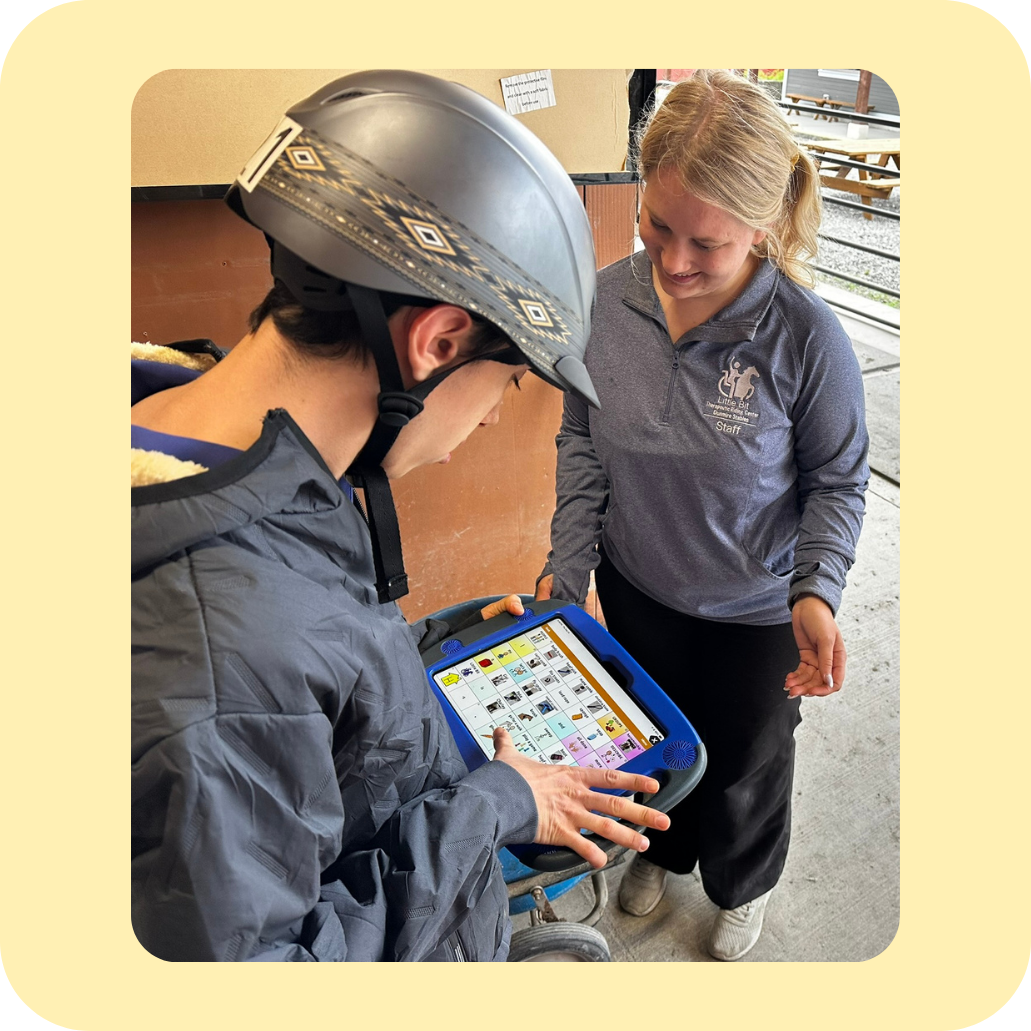
Today, Martin is 21 years old and lives an active life: He loves swimming, biking, rock climbing, riding his scooter, and being outdoors. Music is a big part of who he is—he even has his own playlists. He’s always listening and observing, and he’s often the one who knows where Elsa left her eyeglasses. “I consider Martin a very bright person; he communicates through a device rather than spoken words, and he understands far more than many people realize,” said Elsa.
For over 20 years, Elsa has been Martin’s strongest advocate, building a team of therapists, teachers, and providers around him. Today, her focus is her children’s future. “For me, the future is what keeps me up at night. Everything I do is trying to secure as much as possible financially and environment-wise to provide a good future for my children, and to leave them as independently skilled as possible.”
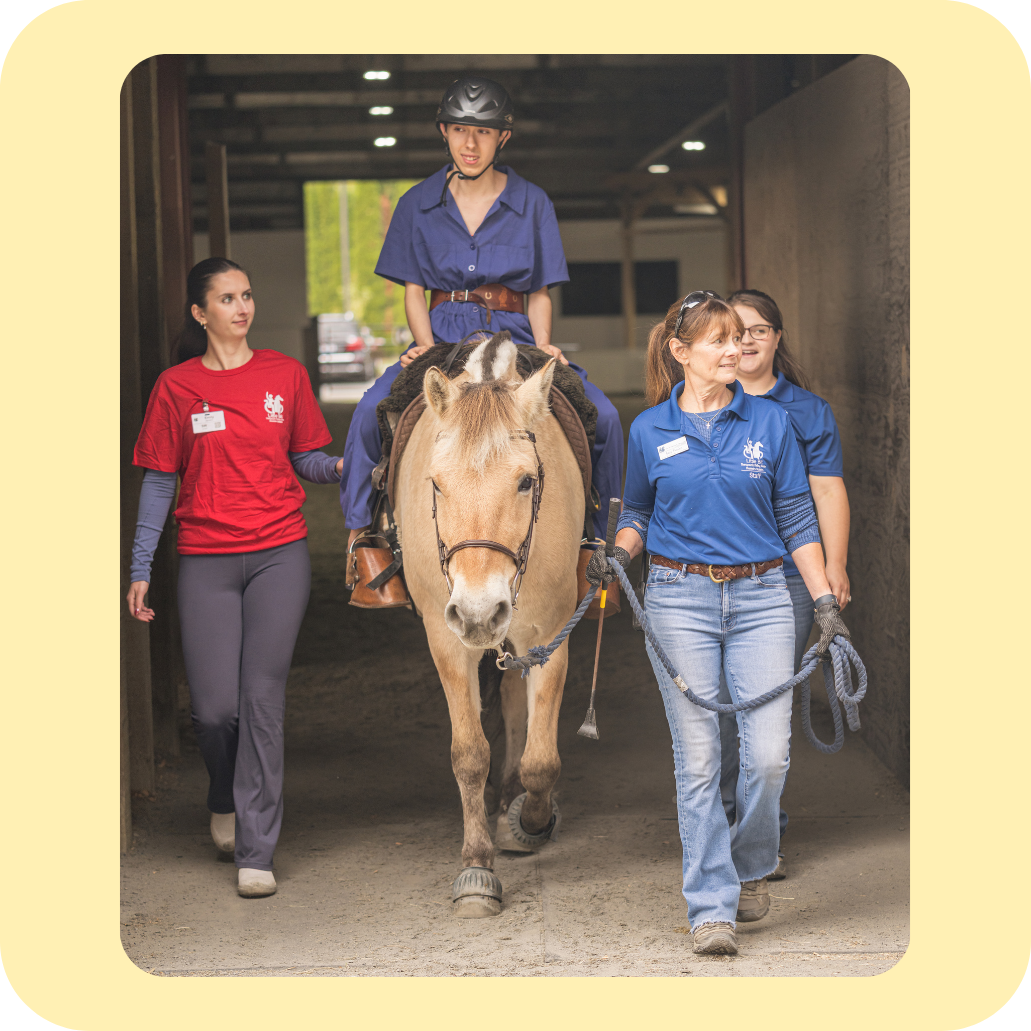
Knowing Martin responds well around animals, Elsa chose to try speech therapy (speech) at Little Bit in 2024 without having any specific expectations. Then, in 2025, Martin added Little Bit occupational therapy (OT) on a second day each week. Describing Little Bit, Elsa said, “. . .It shows from the moment you step in; you’re welcome no matter who you are.” Using his device, Martin shared that Little Bit makes him “happy.”
Martin benefits from the collaboration between Little Bit therapists and between the therapists and Elsa. His goals for speech and OT are different, yet his therapists regularly share ideas and what is working well. For example, his occupational therapist, Sarah, a Certified Occupational Therapy Assistant, suggested devoting time at the start of his speech session to jump on a trampoline. Doing so helps him regulate his sensory system and gain more during his therapy session, such as increasing his language use using any type of communication. Sarah also worked with Elsa to find clothing that was more comfortable for Martin.
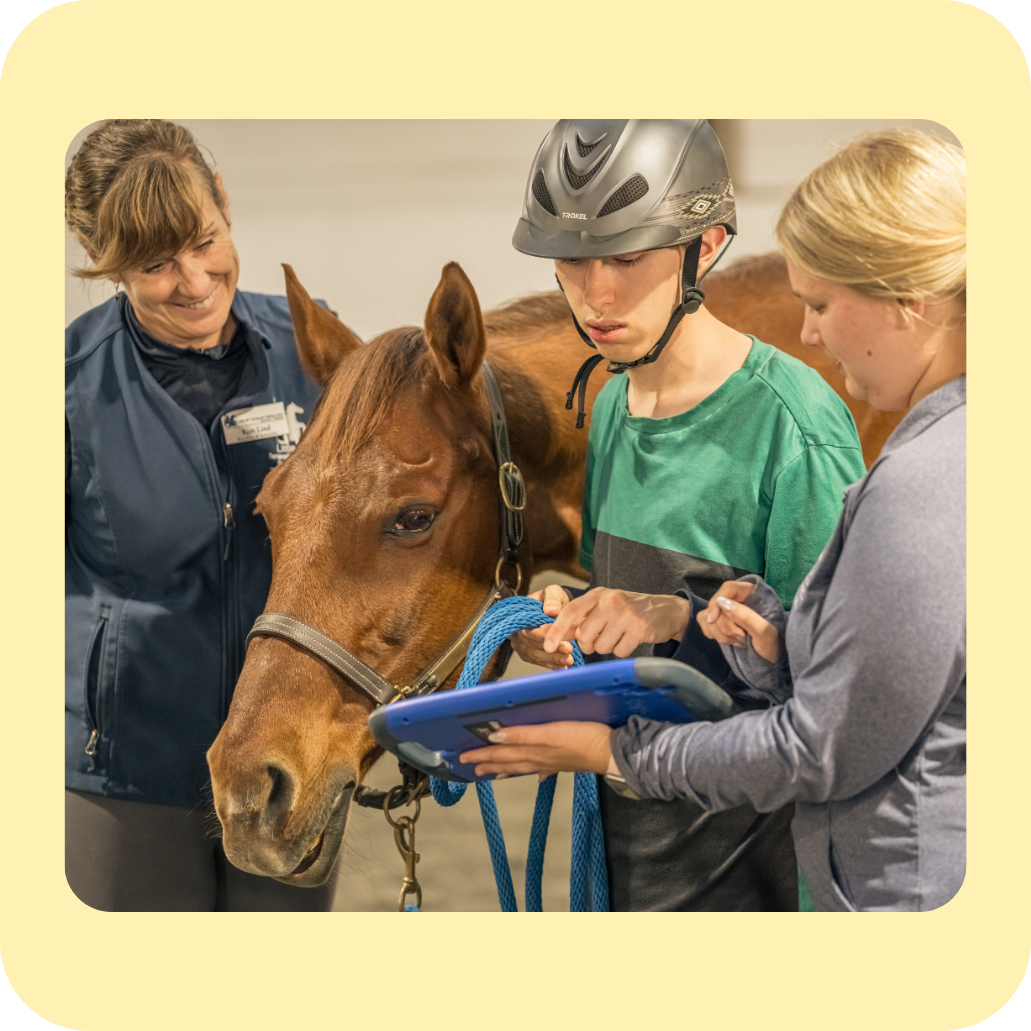
Alyssa, his Little Bit Speech-Language Pathologist, models for Martin that any language use is great. Martin’s Augmentative and Alternative Communication device (AAC), first introduced at Little Bit, has become a very important tool while working to reach his newest speech goals. Elsa shared, “I was hesitant about the AAC device; now I’m very happy. He’s definitely communicating more. He’s definitely more social.” With his family’s input, Alyssa adds customized content choices to his AAC, such as favorite songs and foods, including pretzels, fried chicken, and seaweed; feelings; and names and photos of people and horses he often sees. The more customization, the more excited Martin is to use it, and the more he communicates independently. There’s even a page on the device dedicated to Little Bit content. The AAC is naturally integrated throughout his speech and OT sessions.
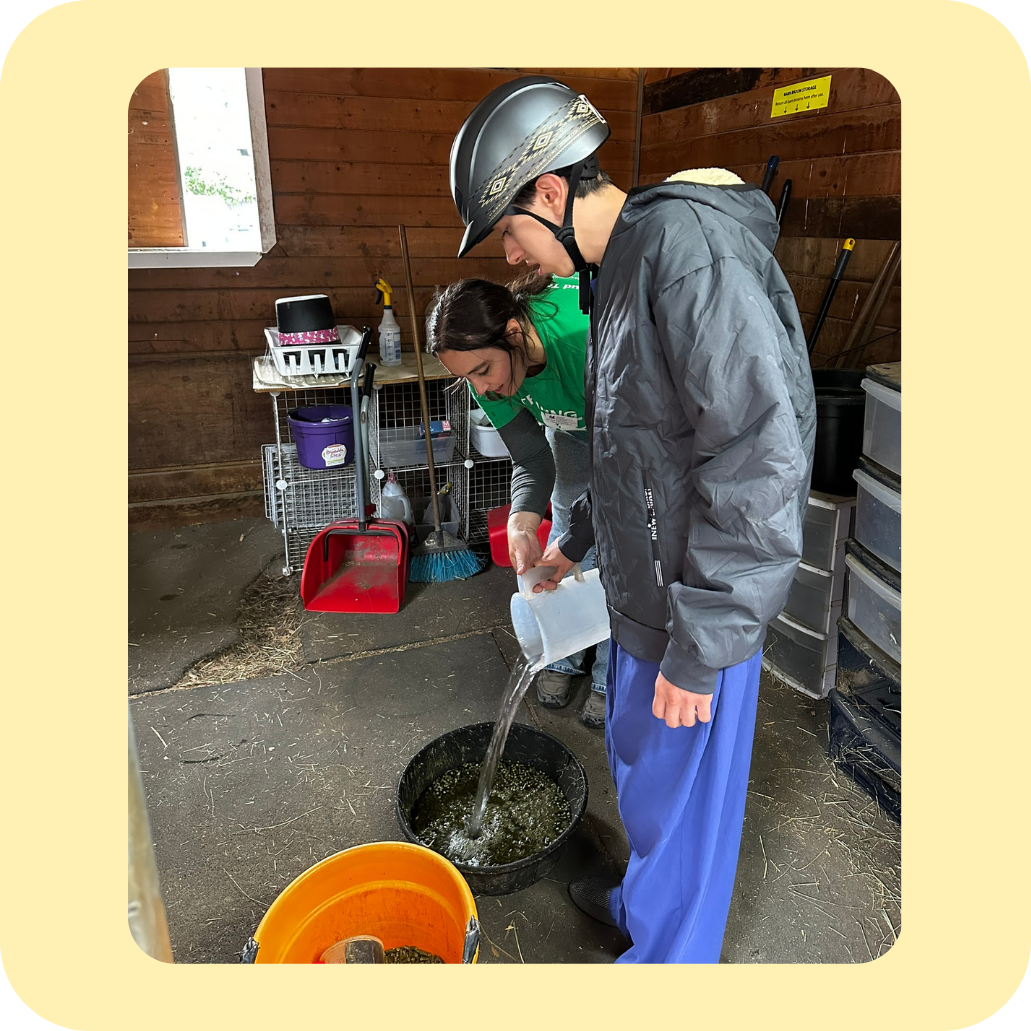
Sarah recognized that in order to accomplish his OT goals, Martin first needed help with overcoming his sensory challenges. Because of his high sensitivity in some areas, like his head, feet, and hands, it’s difficult for Martin to focus on other areas, like using his arms. His Little Bit team also sees Martin’s sensory system being more regulated at the beginning of his speech session because he received Little Bit OT the day before.
In speech, Martin works unmounted, or on the ground, with his partner Skip. In OT, he rides Bear. Both horses are ideal partners for Martin but in different ways. Skip is patient and can give Martin the time he needs to process information and communicate his feelings and preferences with his team. While less experienced than Skip, Bear knows to put his playfulness on pause when he’s with Martin to provide just what he needs: a consistent and smooth walk and rhythm that Martin’s body can become in sync with. Using his AAC, Martin describes Bear as “a good friend” and Skip as “silly and kind.” Martin is affectionate and gentle, so it’s easy to see why both horses respond well to him.
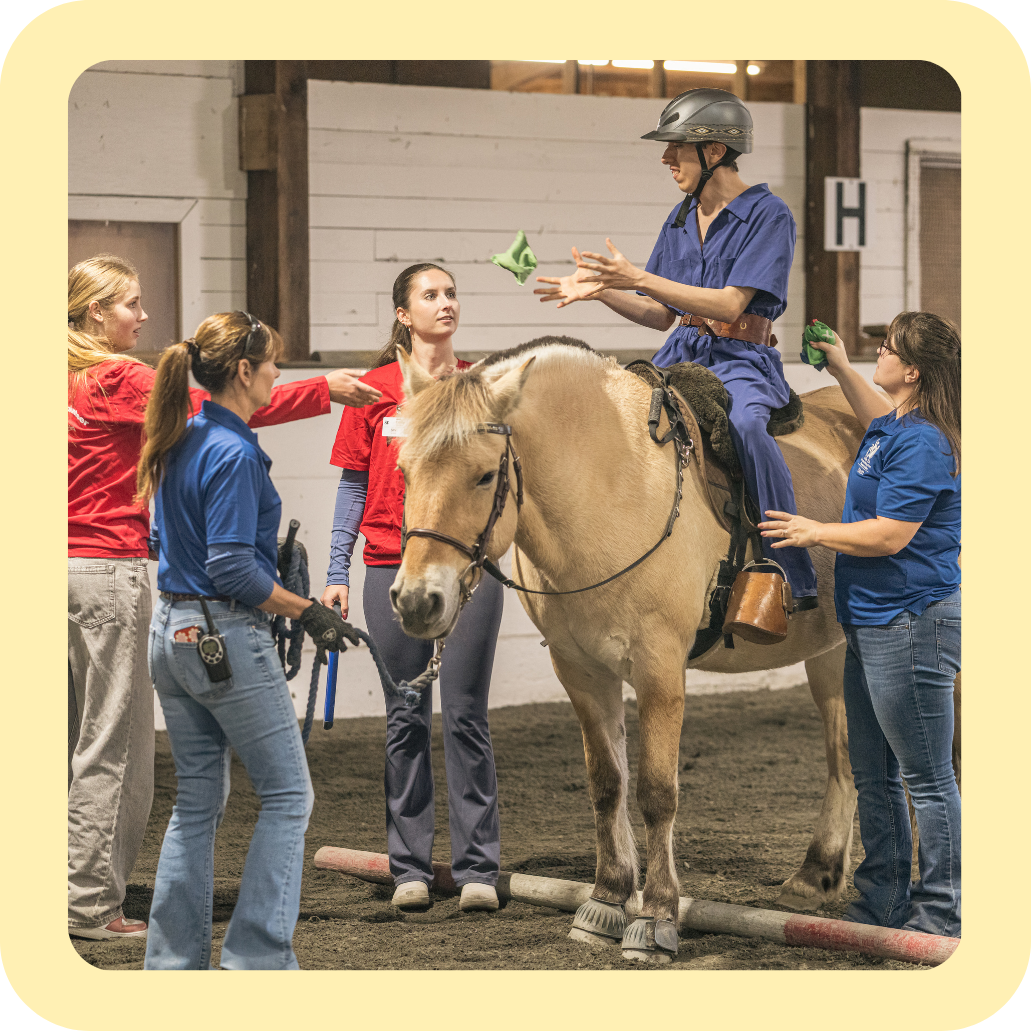
In OT, Martin is also working on increasing his awareness of his own body and his body’s signals. Sarah shared, “Many people with autism struggle with reading and identifying those signals and implementing a strategy to address them before it leads to a high level of frustration or discomfort.” Helping Martin identify how he is feeling, such as hot or cold, and focusing on communicating his discomfort in a positive way, is key to preventing frustration. “I haven’t seen Martin getting frustrated because we don’t know what he wants in a long time. Martin has become more confident, because people, not only me, are understanding him better,” said Elsa.
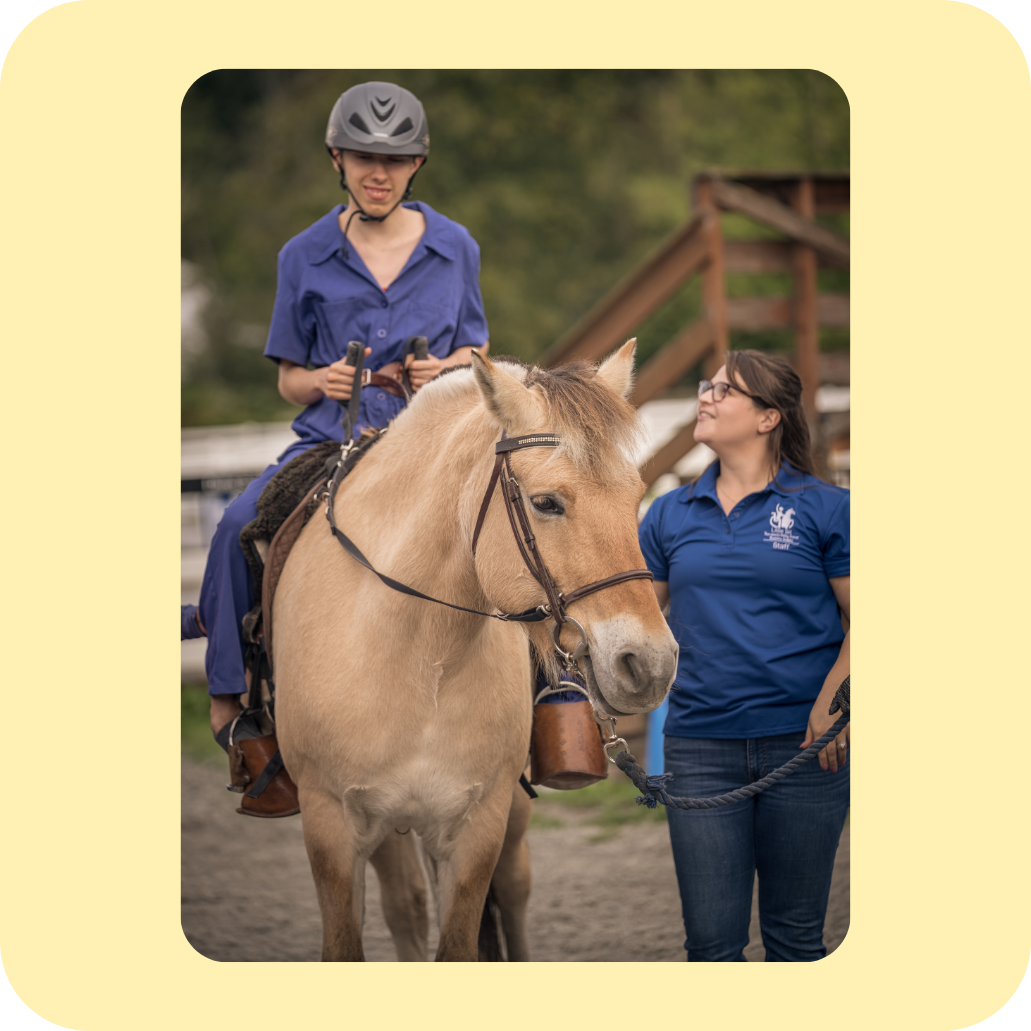
Martin’s mounted therapy started as many do—without a saddle or stirrups for his feet. Sarah, after seeing Martin try to move one leg onto Bear’s back, added stirrups to their sessions. The stirrups, combined with Bear’s consistent movement, provided the comfort and confidence that Martin needed to try transitions from sitting to standing while riding. Doing so builds muscle, body awareness, and balance, all related to his therapy goals. Sarah shared, “I think the biggest thing that I’ve learned from Martin is that often times there’s not a lack of capability, desire, or will. . . It could just be the smallest of barriers.” Little Bit provides opportunities for growth, and Martin continues to prove that.
Alyssa shared, “Little Bit is a very functional setting, with opportunities such as providing the steps to feed horses carrots and communicating socially about a shared interest in animals. Little Bit offers real-world experiences rather than simulated ones. I am always excited to hear about carryover of speech and language skills developed at Little Bit in settings such as home and school.”
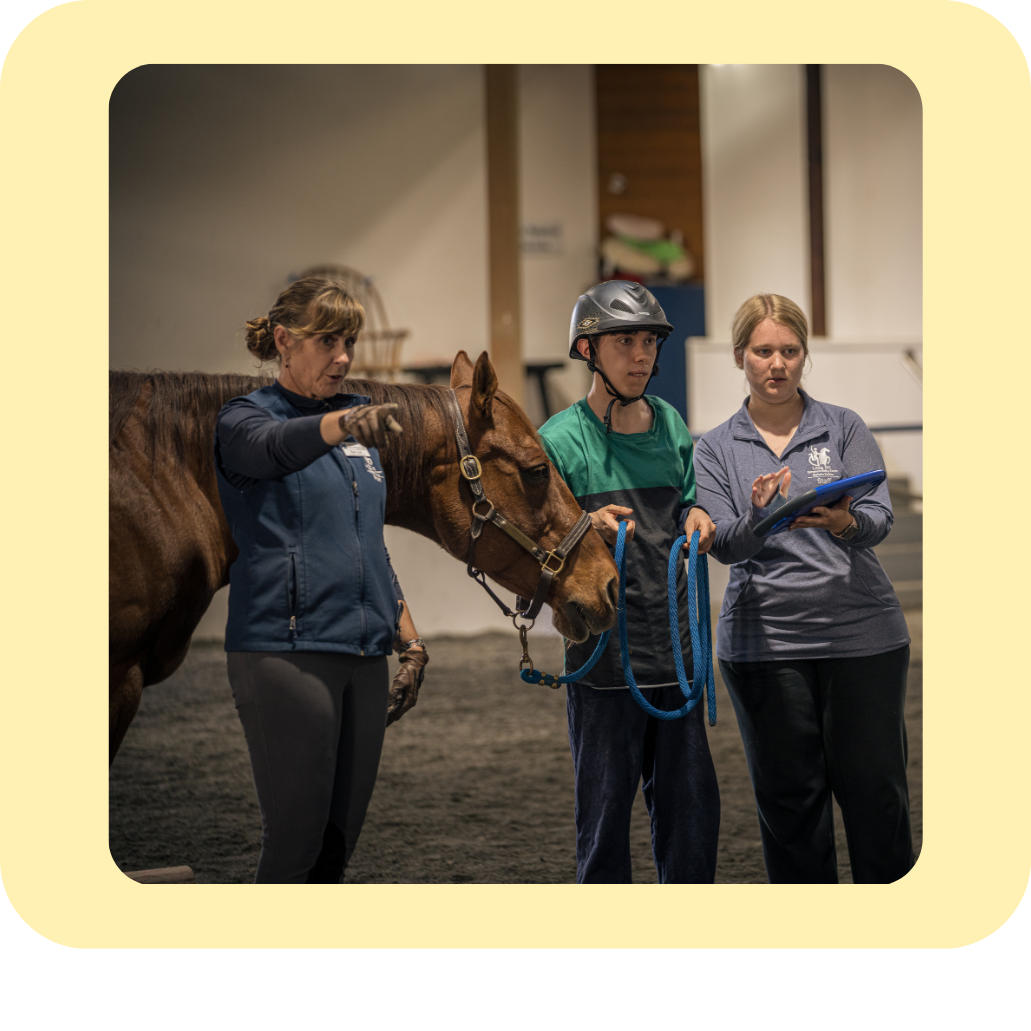
To help prevent frustration and increase Martin’s communication, his Little Bit team avoids asking open-ended questions, such as “What song do you want to play?” Instead, Alyssa often models statements, such as “I wonder what song you want to play.” Those statements encourage Martin to find the button on his AAC of the song he wants to play—one of his favorites is “Don’t Go Breaking My Heart,” sung by Elton John and Kiki Dee. A key step to reducing frustration and increasing success is simply waiting as long as it takes for Martin to process language used by other people. Martin knows that jumping on the trampoline is an option at the beginning of his session, so he’ll often press the “trampoline” button on his AAC, followed by Alyssa modeling the statement, “I want to jump on the trampoline.” Alyssa also regularly models how to search for a word on his AAC.
Martin has found his community at Little Bit. He’s always smiling when he arrives and happily greets everyone he knows. “There hasn’t been one day when he didn’t want to come. . . He is so well received,” said Elsa.
“I’ve been so amazingly surprised with how well he is doing. . . This is the equivalent of my child being valedictorian. . . Everything that I have learned here is way beyond my expectations. I don’t want this place to leave ever. I want to be a part of it always because this place has given us as a family so much. I’ve never been so on board with a place as I am with this one,” said Elsa.
Thank you to Martin and Elsa for sharing their Little Bit story with all of us. Thank you to Martin’s Little Bit team.
Thank you to Steve Birds Photography.


